
The Town of Innisfil partnered with the Lake Simcoe Region Conservation Authority (LSRCA) to transform an underused area of Circle Park into a thriving wetland habitat. Completed in 2021, the project includes new wetland features, wildlife habitats, and more.
About the project
Located approximately 200 metres from Lake Simcoe, Circle Park in Gilford was historically wet for approximately 90 per cent of the year. This limited recreational opportunities and created ongoing drainage concerns for nearby residents.
Through re-grading existing wet areas and introducing new habitat features, the project transformed the space into a functional wetland while creating opportunities for passive recreation.
Project features
The completed wetland incorporates several features designed to support local ecosystems and provide opportunities for residents to enjoy nature:
- Wetland ponds: Two ponds of varying depths were created to support aquatic habitats. The north pond is approximately 0.9 metres deep, while the south pond is approximately 1.5 metres deep.
- Wildlife habitat: Native tree and shrub plantings and other habitat features support a diversity of local plants and animals.
- Turtle nesting site: A designated nesting area provides suitable habitat for turtles found in the surrounding area.
- Osprey platform: A nesting platform provides a potential nesting location for ospreys known to frequent the area.
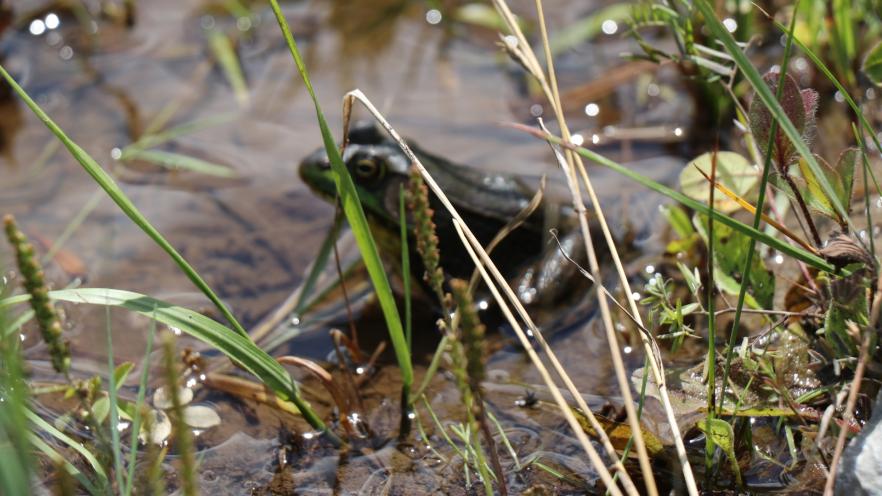
The wetland has attracted a variety of wildlife, including ducks, frogs, and dragonflies.


Supporting a healthier Lake Simcoe
Wetlands play an important role in maintaining healthy watersheds. They provide habitat for plants and animals, filter and absorb contaminants, help manage stormwater, and contribute to improved water quality.
The Circle Park Wetland supports broader efforts to reduce phosphorus entering Lake Simcoe through the Innisfil Creeks Subwatershed, contributing to improved watershed health.
Learn more about phosphorus reduction in Lake Simcoe.
Environmental research and monitoring
The LSRCA and Lakehead University conducted research at the Circle Park Wetland to monitor methane emissions from the habitat. This research helps improve understanding of greenhouse gas emissions from natural areas and the role wetlands play in the carbon cycle and climate change mitigation.
For more information about the research, contact the LSRCA at restoration@LSRCA.on.ca.